
Dental Implants: A Modern Solution for Missing Teeth
Missing teeth can affect much more than the appearance of a smile. Depending on the location and number of missing teeth, a person may experience difficulty chewing, changes in speech or reduced confidence.
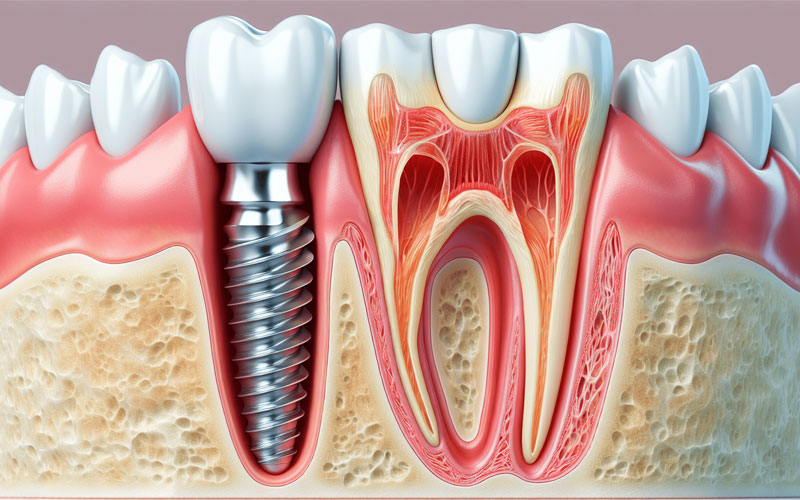
Dental implants are one option used to replace missing teeth. An implant-based restoration is designed to replace the missing tooth structure with a restoration supported by an implant placed in the jaw.
What Is a Dental Implant?
A dental implant is a small component placed in the jaw as part of an implant-supported tooth replacement. After appropriate healing and assessment, the implant can support a dental restoration such as a crown.
Treatment is planned according to the individual's dental condition, bone situation, oral health and overall treatment requirements.
Why Do People Consider Dental Implants?
A missing tooth can make everyday activities such as chewing or speaking less comfortable. Some people also feel self-conscious about a visible gap in their smile.
Implant-supported restorations can provide a fixed tooth-replacement option for selected patients and can be designed to look natural as part of a comprehensive treatment plan.
Benefits of Dental Implants
1. Replacement of Missing Teeth
Dental implants can be used as part of treatment to replace individual missing teeth or, in appropriate cases, to support more extensive tooth replacement.
2. Natural-Looking Appearance
The final dental restoration can be designed to complement the surrounding teeth and the patient's smile.
3. Support for Chewing Function
Replacing a missing tooth can help restore the ability to chew more comfortably. The exact outcome depends on the patient's dental condition and the completed restoration.
4. Fixed Tooth Replacement
Unlike removable appliances, an implant-supported restoration is designed to remain in place after treatment.
What Happens During Dental Implant Treatment?
Dental implant treatment normally begins with a detailed consultation. The dentist examines the teeth and gums and evaluates the area where the tooth is missing.
Diagnostic imaging may be recommended when clinically necessary to evaluate the treatment area and assist with planning. Current ADA recommendations emphasize using dental imaging when it is clinically necessary and appropriate for the individual patient.
Step 1: Consultation
The dentist discusses the missing tooth, dental history, oral health and treatment goals.
Step 2: Examination and Planning
The treatment area is assessed and the dentist determines whether additional treatment is required before implant placement.
Step 3: Implant Placement
When implant treatment is appropriate, the implant component is placed according to the planned surgical procedure.
Step 4: Healing
Healing takes time and varies between patients. The dental team monitors the treatment area during follow-up appointments.
Step 5: Final Restoration
Once the treatment reaches the appropriate stage, the final restoration can be planned and fitted.
Who May Be a Candidate for Dental Implants?
Implant treatment is not identical for every patient. The dentist needs to evaluate the condition of the gums, available bone, remaining teeth, oral hygiene and other relevant health factors.
In some cases, additional procedures or preliminary dental treatment may be required before implant treatment can proceed.
Follow Us On
Our Services
Quick Links
Contact Details
© Sai Manasa Dental Clinic | Powered by Maagnus.in